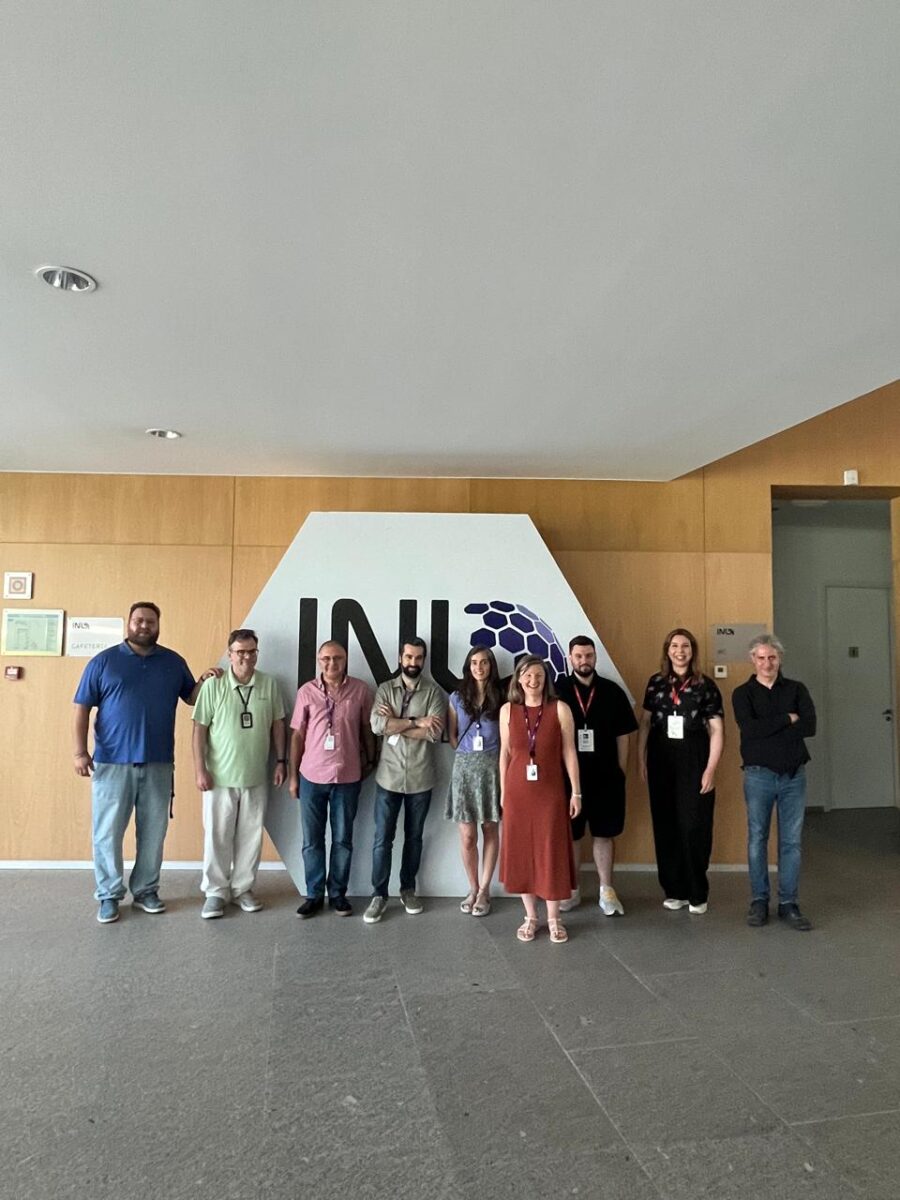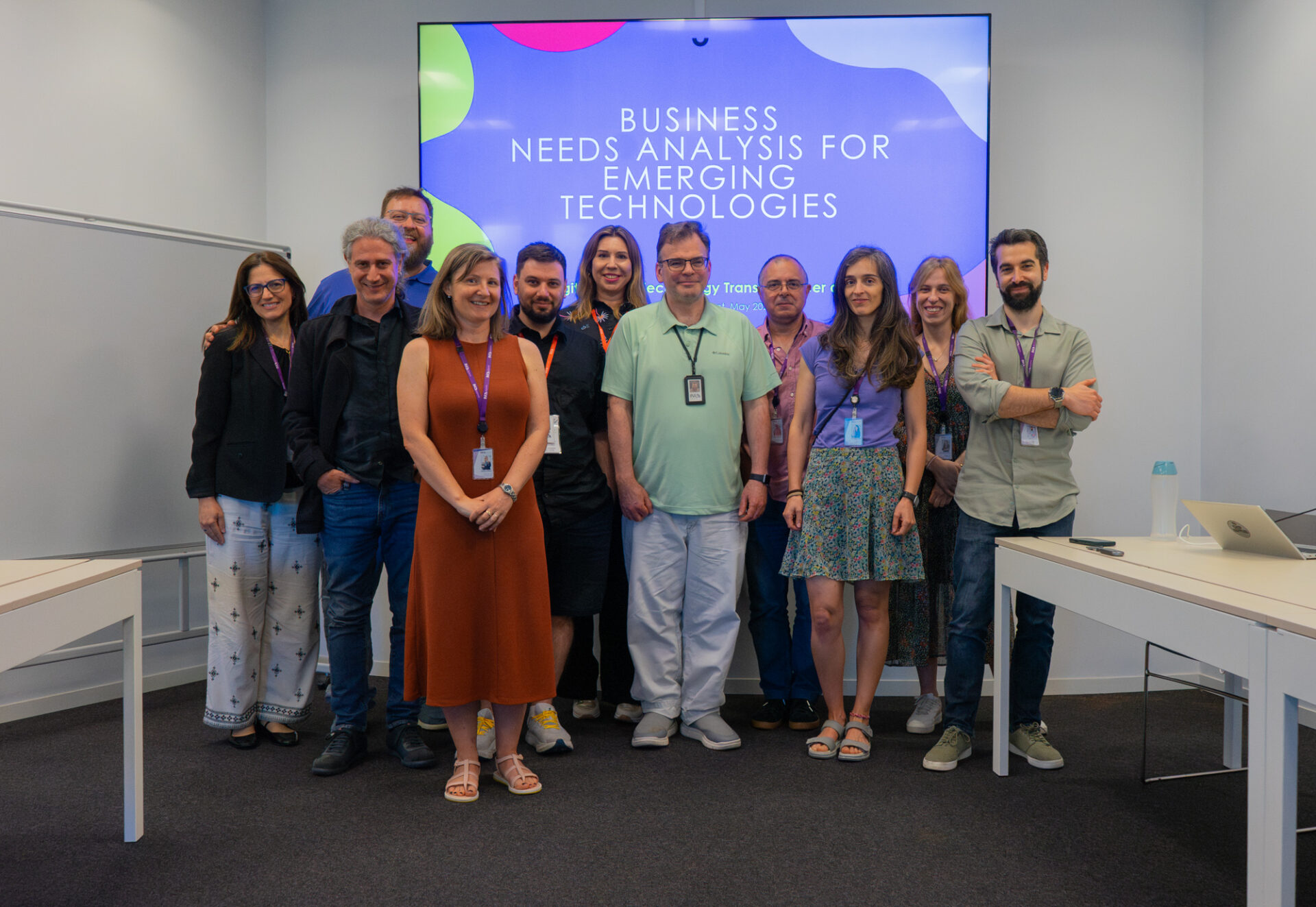
The DemosAxia project successfully delivered a Business Needs Analysis Workshop in Braga, Portugal, providing researchers from participating Research and Technology Organisations (RTOs), INL and FORTH with a hands-on opportunity to strengthen their innovation management capabilities and apply them directly to their own technologies. Led by Brigita Jurisic, Technology Transfer Officer at INL, the workshop focused on equipping participants not only with conceptual knowledge of innovation management tools but, importantly, with the opportunity to apply them in practice through a highly interactive learning process designed to build a solid understanding of core innovation management tools.
Researchers were guided through the KTH Innovation Readiness Level™ framework leveraging recognised strategic analysis tools that are essential for innovation management. Including PESTLE analysis to understand external factors influencing technology adoption, SWOT analysis to assess internal strengths and weaknesses alongside external opportunities and threats, and Porter’s Five Forces to evaluate competitive dynamics and market attractiveness. By applying these tools directly to their technologies, participants gained analytical insights into strategic implications of broader environment, such as identifying barriers to adoption and evaluating competitive positioning to enable them to define the pathways for scaling their technologies. The practical application is essential for researchers aiming to engage more effectively in technology transfer and commercialisation processes.
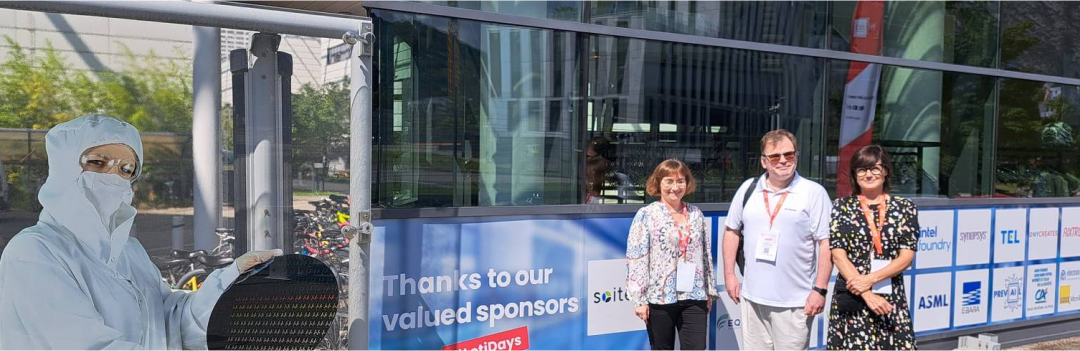
Another important component of the workshop focused on the practical techniques used to carry out Business Needs Analysis and to build a solid understanding of customer discovery. Customer discovery, a core element of the Lean Startup methodology introduced by Steve Blank and Eric Ries, is a structured process that helps identify target customers, understand the problems they face, and assess whether those problems are worth solving. It involves formulating hypotheses, engaging directly with users, testing assumptions, and validating the existence of a genuine market need. In line with the customer discovery approach, DemosAxia researchers will have the opportunity to test the hypotheses developed during the upcoming CEA Leti Innovation Days in Grenoble, where they will showcase their demonstrators and engage directly with industry stakeholders. This interaction will enable them to gather critical feedback, challenge assumptions, and refine their value propositions, ultimately strengthening the pathway to market and increasing the likelihood of successful technology adoption.